EXECUTIVE SUMMARY
At over 200 days, the 2026 Jones Act waiver is the longest in history, and is currently set to expire in mid-November. Critics argue that the waiver has harmed the US maritime industry, but Balsa found no change in Jones Act fleet activity during the waiver period, when compared to vessel movement data from 2025. Kirby, which owns a fleet of Jones Act-eligible articulated tug barges, reported that the waiver had no impact.
While the first two waiver periods had few limitations, the latest waiver extension restricts eligible cargo. The most recent extension, which began on August 17, 2026, also requires MARAD to confirm that no Jones Act vessel is available before it approves a waiver voyage. MARAD has reported 298 voyages, and at least twelve more have gone unreported since July.
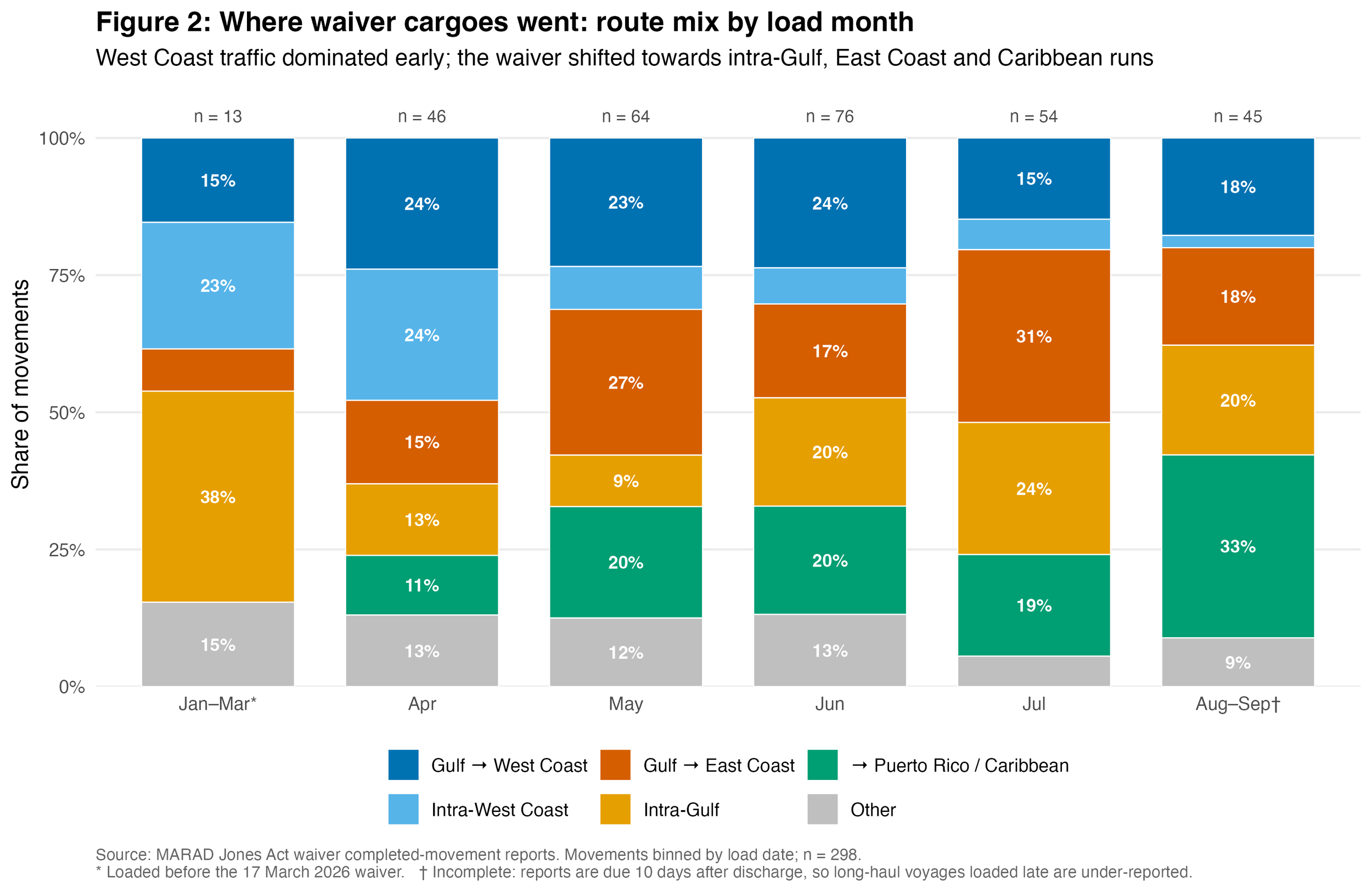
Trade has shifted from the Gulf–West Coast route, which dominated until June, towards Gulf–East Coast shipments. The share of voyages serving Puerto Rico has tripled since April.
OVERVIEW OF JONES ACT WAIVER 2026
At over 200 days, the 2026 Jones Act* waiver is the longest continuous Jones Act waiver in history. Having been extended twice, it is currently set to expire in mid-November 2026. Criticisms of the waiver consistently point to its negative impact on the U.S. maritime industry. However, Balsa’s recent review of Jones Act Fleet activities demonstrate that there has been no change in Jones Act Fleet activity, when compared to a similar period in 2025. Recent reports also show that the company Kirby, which manages a fleet of Jones Act-eligible articulated tug barges (ATBs) was not impacted by the waiver. This is largely because Kirby’s ATBs run on term contracts, rather than short-term spot/voyage contracts, unlike many of the waiver vessels. According to the CEO, Kirby ATBs have been operating at the same capacity before and after the waiver.
In response to concerns raised by the maritime industry, the most recent waiver extension limits the types of cargo ships can carry and creates a new approval process, which requires the U.S. Department of Transportation’s Maritime Administration (MARAD) to determine whether a Jones Act Eligible ship or ATB is available before approving a waiver.** This third waiver period went into effect on August 17, 2026.
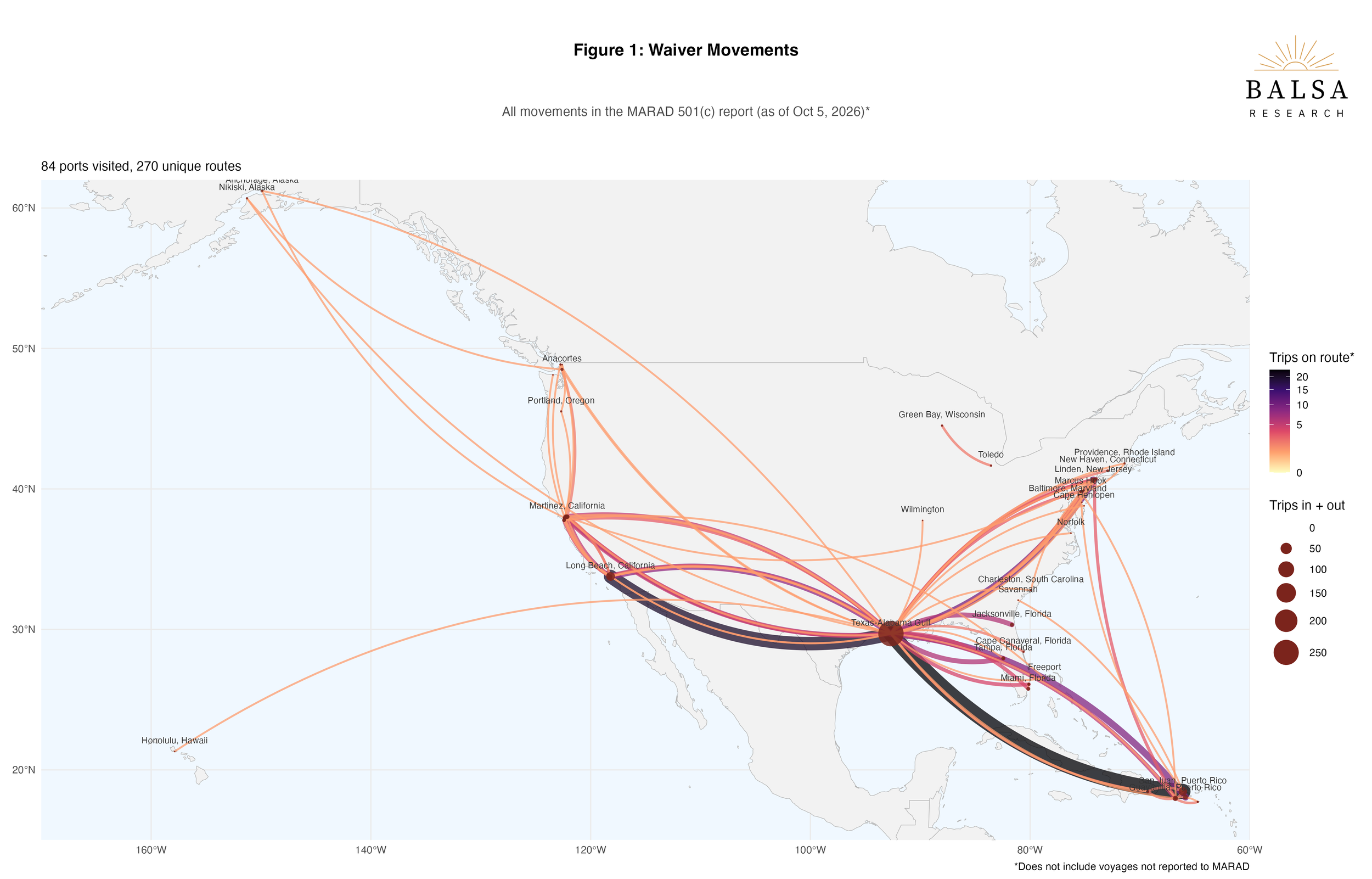
As of October 5, there have been a total of 298 voyages reported by MARAD for the entire waiver period. However, it should be noted at least twelve unreported waiver trips have been independently documented since July. Notably, the unreported deliveries of fuel include seven voyages to California, three to Puerto Rico, and two to Hawaii.
*The Jones Act refers to 46 U.S.C. § 55102, originating from the Merchant Marine Act of 1920, which requires that vessels transporting goods between U.S. ports must be constructed in the U.S. (46 U.S.C. § 12103), U.S. owned, and crewed at least 75% by U.S. citizens or permanent residents. Due in part to the Jones Act, many ports within the U.S., especially those far away from oil pipelines or other modes of transportation, such as rail or truck, rely heavily on international shipments of oil.
**See Balsa’s analysis on the availability of U.S. vessels during the waiver period here.
TRENDS IN WAIVER ACTIVITY
The waiver voyages have largely connected the Gulf coast to other Continuous U.S. ports on the West and East Coasts, as well as Puerto Rico (Figure 1). The majority of products shipped include refined petroleum products, crude oil, and renewable diesel.
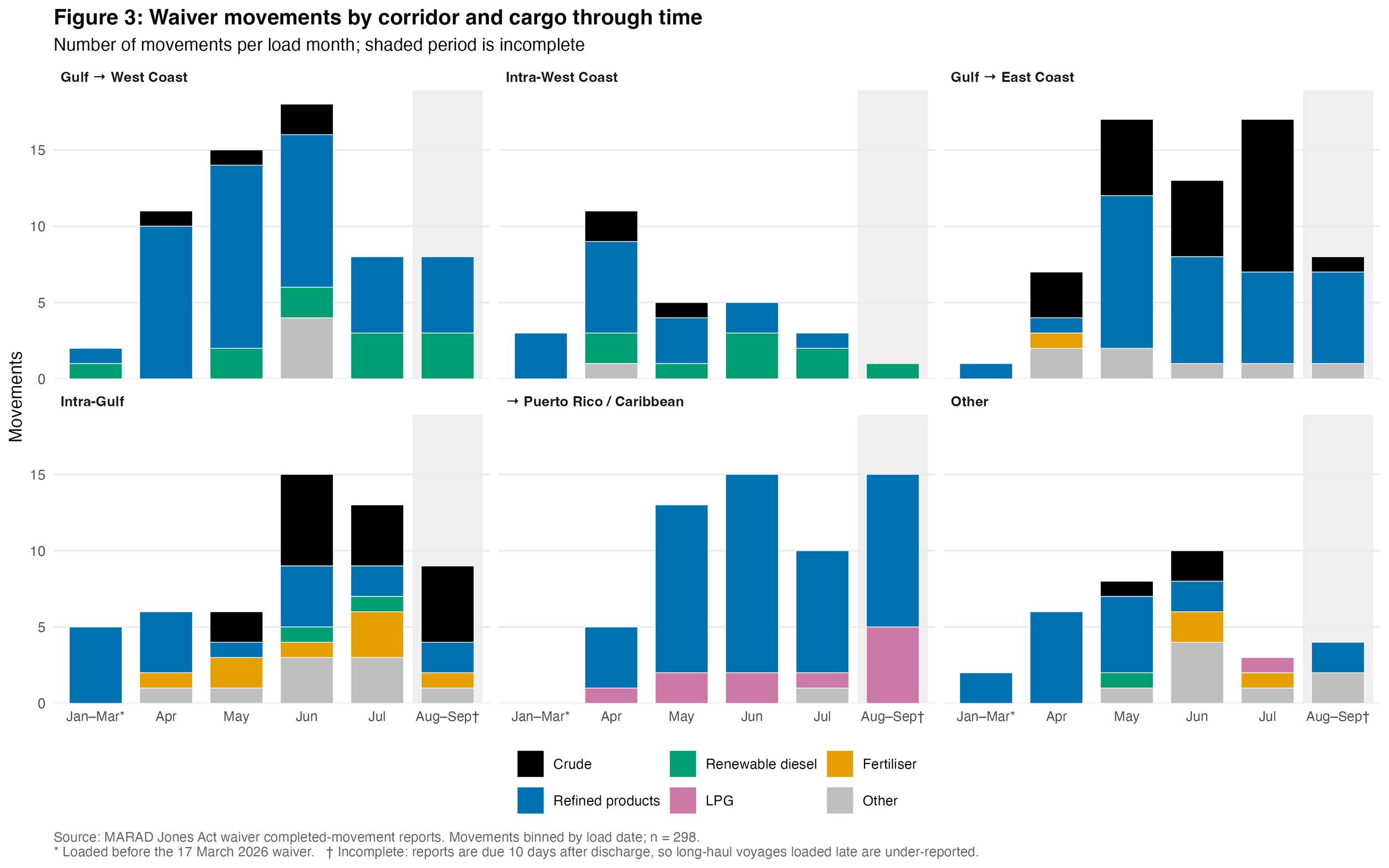
The number of voyages peaked in May and June but have remained fairly steady each month since (Figure 2). As the waiver period enters its second extension, there have been some notable shifts in patterns of movement. From April to June, movement of refined oil and renewable diesel products from the Gulf to the West Coast made up a substantial portion of waiver voyages, these declined steeply in July (Figure 3). In contrast, shipments of Refined products and crude oil from the Gulf to the East Coast increased starting in May (Figure 2).
The share of waiver vessels transporting products along the West Coast has also fallen sharply in June, despite a comparable number of waiver vessels active in July and April. However, the share of waiver voyages connecting Puerto Rico to the U.S. tripled between April and August–September.